
For years, esports was often described as an emerging opportunity: a growing entertainment category, a promising marketing channel, or a glimpse into the future of media.
That future may have already arrived.
A new international study estimates that around 400 million Gen Z consumers regularly engage with esports, placing competitive gaming at the center of how a generation watches content, builds communities, discovers brands, and decides what to buy.
The findings come from The Esports Generation: Who They Are & Why They Spend, a white paper produced by ESL FACEIT Group, Hero Esports, and Niko Partners. The research surveyed 8,000 Gen Z esports fans between the ages of 13 and 30 across eight global markets.
Its broader message is difficult to ignore: esports is no longer simply competing with traditional entertainment for younger audiences. It has become one of the environments where their identities, interests, and consumer habits are actively being shaped.
A Generation Built Around Interactive Media
Gen Z did not abandon media. It changed what media looks like.
According to the study, 71% of Gen Z esports fans regularly watch gaming content, while 66% watch gaming livestreams. Another 33% consume gaming-related podcasts.
These are not audiences sitting quietly in front of a scheduled television broadcast. They move between livestreams, short-form videos, social platforms, voice chats, podcasts, games, and online communities—often engaging with several of them at once.
Gaming is unsurprisingly central to this behavior. Nearly all respondents, or 99%, play videogames. More importantly, 76% both play and watch esports titles.
That relationship between participation and spectatorship gives esports a quality that most traditional media struggles to reproduce. Fans do not merely watch professionals compete. They understand the games, recognize the strategies, follow roster changes, debate balance updates, and experience the same victories and frustrations in their own matches.
Even the remaining audience demonstrates how esports can grow beyond the games themselves. Twenty-four percent of respondents said they watch esports titles that they do not personally play.
In other words, esports is increasingly becoming watchable entertainment in its own right—not merely an extension of playing the game.
Read also: Japan’s Esports Paradox: A Gaming Superpower Building Its Own Path
Traditional Television Is Losing the Battle for Time
The study also illustrates how dramatically media consumption has shifted.
Twenty-six percent of surveyed esports fans said they do not watch any broadcast or cable television during a typical week. Another 20% watch no more than one hour.
That does not mean Gen Z has lost interest in stories, personalities, drama, or competition. It means those experiences are being found elsewhere.
Outside gaming, respondents ranked music as their largest interest, followed by streaming television and movies, and then traditional sports. This suggests that esports fans should not be viewed as a narrow group interested only in gaming.
They are entertainment consumers with broad cultural interests—but they increasingly expect media to be accessible, social, immediate, and participatory.
Traditional television once created shared cultural moments by gathering millions of people around the same screen. Esports creates similar moments through livestream chats, co-streams, watch parties, social media reactions, community servers, and in-game participation.
The screen may have changed. The human desire to belong to something larger has not.
Esports Fandom Is Moving Beyond the Screen
Although esports is built on digital platforms, its communities are becoming increasingly physical.
The report found that 21% of respondents regularly attend gaming conventions and esports events. On average, fans had attended at least one in-person event during the previous nine months.
This matters because live events represent more than an additional way to watch a tournament. They turn online communities into real-world experiences.
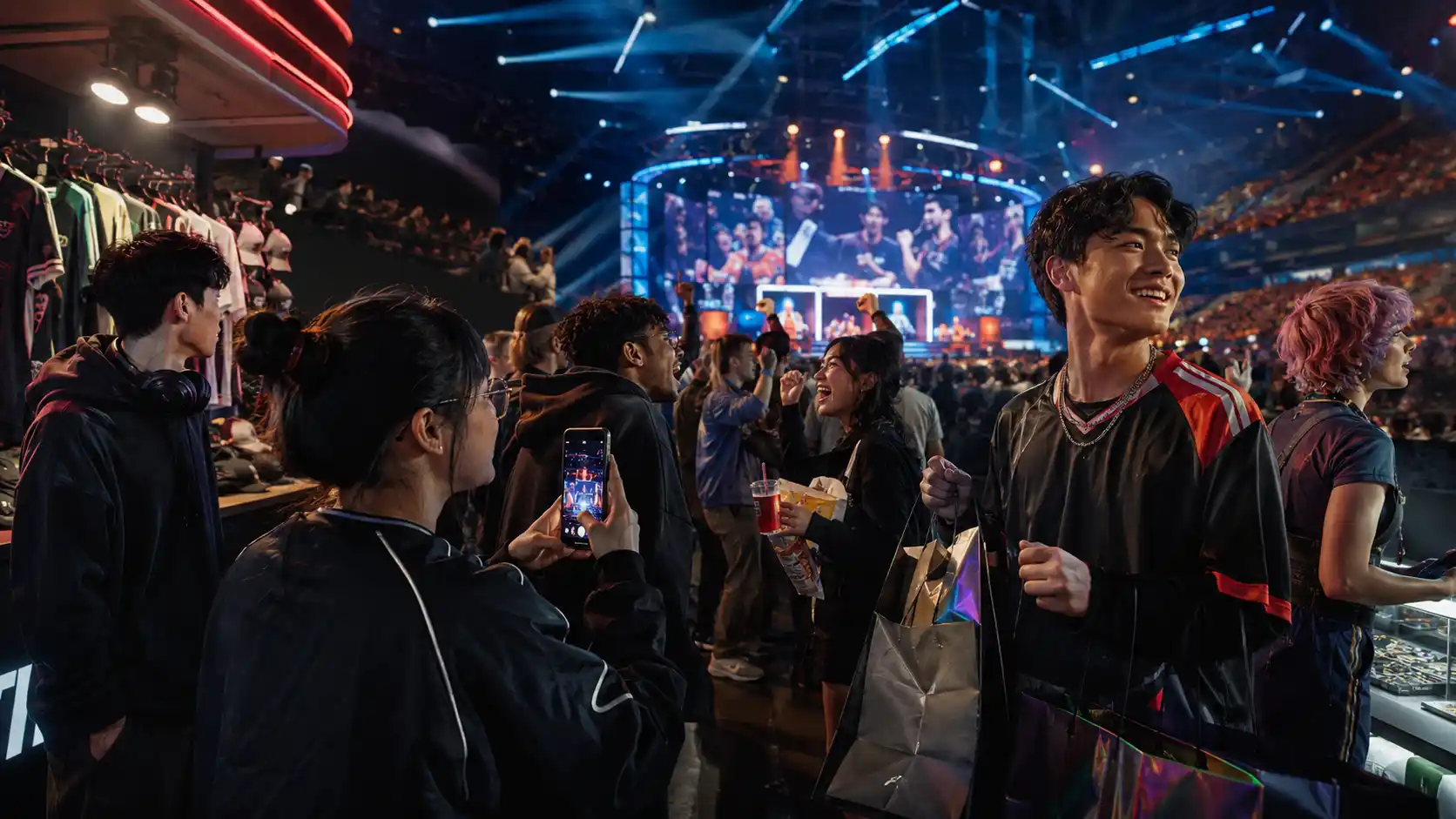
A fan who may have spent years watching a team through a screen can suddenly stand among thousands of people wearing the same jersey, cheering for the same players, and reacting to the same impossible clutch.
For younger audiences who have grown up forming friendships and identities online, these gatherings can feel deeply personal. They offer proof that the community is real—and that they are part of it.
The audience is also becoming more diverse. While the overall survey still skewed male, with men representing 68% of respondents, female participation is growing, particularly at live events.
According to the companies behind the study, women represented 41% of attendees at DreamHack Birmingham 2026. In China, female attendance at the Peacekeeper Elite League and the King Pro League has reportedly exceeded 50%.
These figures challenge the outdated assumption that esports belongs to one narrow demographic. Its audience is expanding, and the culture surrounding it is evolving with that growth.
Gen Z Is Not Ignoring Brands
For companies, perhaps the most significant finding is that esports fans are not blind to commercial participation.
Eighty-five percent of respondents said they notice branding within esports. Seventy-four percent said advertising and brand involvement in gaming spaces influence their purchasing decisions.
Even more strikingly, 66% said they had purchased a product because of a collaboration or co-branding partnership involving an esports team, game, or player.
That is an unusually powerful connection between fandom and commerce.
Food and beverage products were among the most common purchases influenced by esports partnerships, reported by 33% of respondents. Electronics reached the same figure, while fashion followed closely at 32%.
The influence extended into less obvious categories as well. Twenty-eight percent of fans purchased esports-related collectibles, while 17% bought makeup, skincare, or beauty products connected to partnerships. Another 10% purchased products from other partnered categories.
The diversity of these purchases reveals an important truth: the commercial potential of esports is not limited to gaming hardware, energy drinks, or computer accessories.
Esports fans buy clothing. They listen to music. They watch movies. They care about personal style, technology, beauty, food, and culture. Their identity does not begin and end at the gaming desk.
For brands, this creates a much wider field of opportunity—but only when participation feels natural.
Authenticity Cannot Be Treated as Decoration
Esports fans may be commercially responsive, but they are also highly sensitive to whether a brand genuinely understands the community.
Niccolo Maisto, CEO of ESL FACEIT Group, described esports as one of the most effective channels for reaching Gen Z audiences at scale. However, he emphasized that its real value comes from the depth of engagement and trust between fans, players, teams, and events.
That distinction is crucial.
Esports is not simply empty advertising space waiting to be filled. Its audiences have spent years building inside jokes, rivalries, rituals, heroes, villains, and shared memories. A company entering that environment is not interrupting a generic broadcast. It is entering someone’s community.
Brands that arrive with little understanding of the culture may be noticed, but not necessarily welcomed.
A logo placed beside a tournament stage may create visibility. A partnership that contributes to the fan experience can create affection.
That contribution could involve supporting grassroots competitions, creating useful content, giving fans access to players, developing limited-edition products, improving event experiences, or helping teams tell more meaningful stories.
The strongest partnerships do not merely ask, “How do we sell to this audience?”
They ask, “What can we add to something this audience already loves?”
More Than a Marketing Channel
It is tempting to view this study only through the lens of advertising and purchasing power.
Yet the larger significance of esports goes beyond its ability to sell electronics, clothing, drinks, or collectibles.
Esports represents a fundamental change in how younger generations form relationships with entertainment.
Fans are no longer satisfied with simply receiving content. They want to participate in it. They want to comment, compete, remix, react, organize, and belong.
They follow players not only as athletes, but also as livestreamers, creators, personalities, and members of an ongoing digital community. A tournament result can become a meme, a social media debate, a documentary storyline, or a shared emotional memory within minutes.
That depth of participation is what makes esports so valuable—and so difficult to replicate through conventional advertising.
Danny Tang, Co-Founder and CEO of Hero Esports, described esports as a global cultural and economic force rather than a niche market. The study supports that argument, revealing an audience that is young, increasingly diverse, commercially active, and deeply invested.
Lisa Hanson, CEO of Niko Partners, also noted that esports fans resemble followers of traditional sports in their passion and the strong bonds they form within their communities. At the same time, their interests reach far beyond gaming, opening opportunities for brands across multiple industries.
The Audience Is Already Here
Major esports events continue to demonstrate the scale of this attention.
The companies behind the study highlighted the Intel Extreme Masters Cologne Major grand final in June 2026, which reportedly attracted more than 2.75 million peak viewers and became the most-watched match in Counter-Strike history.
Numbers of that scale make it increasingly difficult to describe esports as a small or experimental corner of entertainment.
But the real importance of the study is not contained in one record-breaking final or one audience statistic.
It is found in the habits behind those numbers.
Hundreds of millions of young people are choosing esports as part of their daily media diet. They are watching, playing, attending events, following personalities, joining communities, and buying products connected to the culture.
For media companies, brands, and rights holders, the opportunity is enormous. So is the responsibility.
Gen Z does not need companies to explain why esports matters. They have already decided that it does.
The question now is whether brands can enter that world with enough patience, credibility, and respect to matter alongside it.